How Transaction Timelines Shape Accumulator Strategies Across Team Events, Court Matches, and Digital Arenas
Zoe Russell · Aug 3, 2026
How Transaction Timelines Shape Accumulator Strategies Across Team Events, Court Matches, and Digital Arenas
Transaction timelines determine the pace at which bettors can fund accounts, place multi-leg wagers, and adjust positions during live events, and these intervals directly influence accumulator construction across team sports, court competitions, and digital arenas. Data released in August 2026 from the New Jersey Division of Gaming Enforcement indicated that live betting accounted for over 62 percent of online revenue in the first half of the year, underscoring how processing speeds affect the ability to build and modify accumulators in real time.
Team Events and Funding Windows
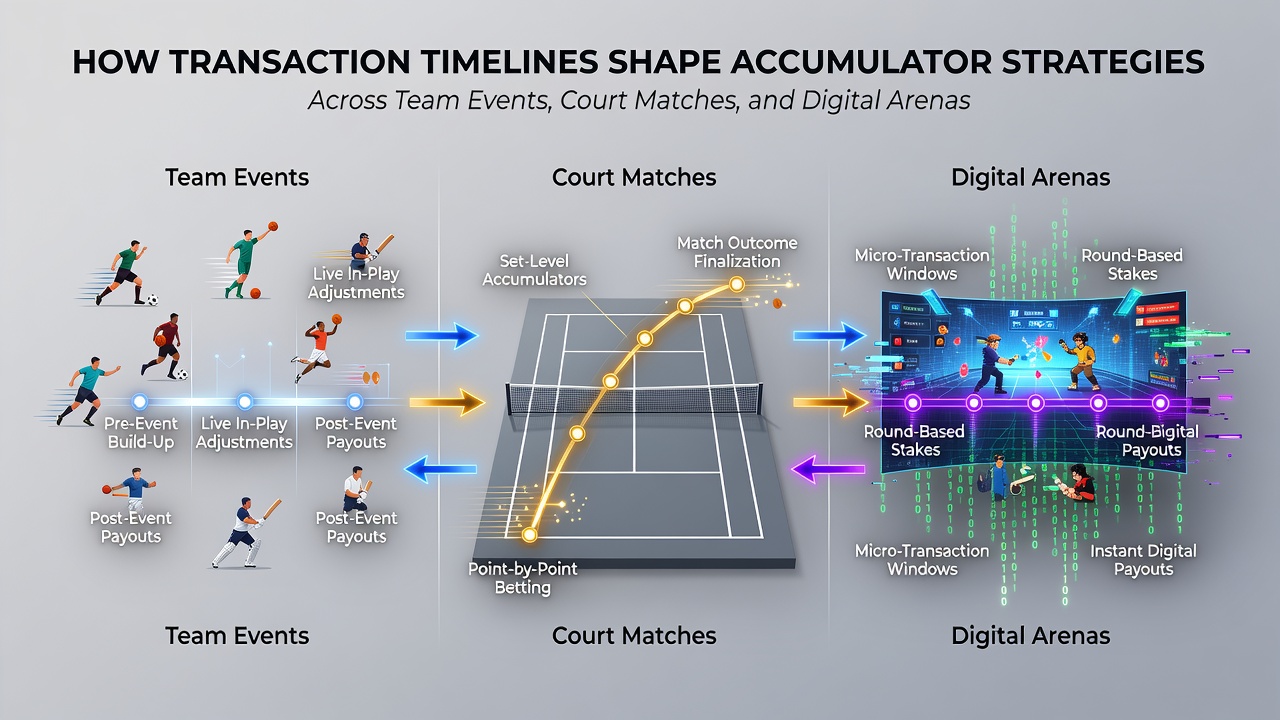
Football and basketball matches often feature extended play periods that allow bettors to layer additional selections onto accumulators while games unfold, yet the speed of deposit confirmations sets the practical limits on how many legs can be added before odds shift. Observers note that platforms processing instant bank transfers enable users to respond to in-game developments such as substitutions or momentum changes by extending their multi-bet structures, whereas slower methods restrict activity to pre-match planning. Research from the University of Nevada, Las Vegas gaming studies program has shown that accumulator participation rises when transaction confirmations occur within thirty seconds, because bettors can chain selections across multiple matches scheduled on the same day without losing market access.
Court Matches and Real-Time Adjustments
Tennis and basketball court events move through shorter, more discrete scoring segments that create frequent windows for live accumulator updates, and payment processing speed becomes critical when users attempt to add sets, quarters, or player props to existing bets. Those who study betting patterns report that platforms with sub-minute withdrawal and deposit cycles support higher volumes of mid-match accumulator modifications, particularly during tie-breaks or overtime periods where odds fluctuate rapidly. In contrast, delays exceeding two minutes often force bettors to lock in selections earlier, reducing the number of legs they can realistically include before the next point or basket alters the market.
Digital Arenas and High-Frequency Opportunities
Esports competitions operate on compressed timelines with rapid map changes and round endings, and accumulator strategies in these environments depend heavily on seamless transaction flows that keep funds available between matches. Figures from the American Gaming Association’s 2026 industry report reveal that esports live betting volumes grew 28 percent year-over-year, driven in part by platforms that integrate instant payment rails allowing bettors to chain selections across sequential tournaments without interruption. When processing times stretch beyond acceptable thresholds, participants tend to consolidate their accumulators into fewer, lower-risk combinations rather than pursuing the extended parlays that faster systems support.
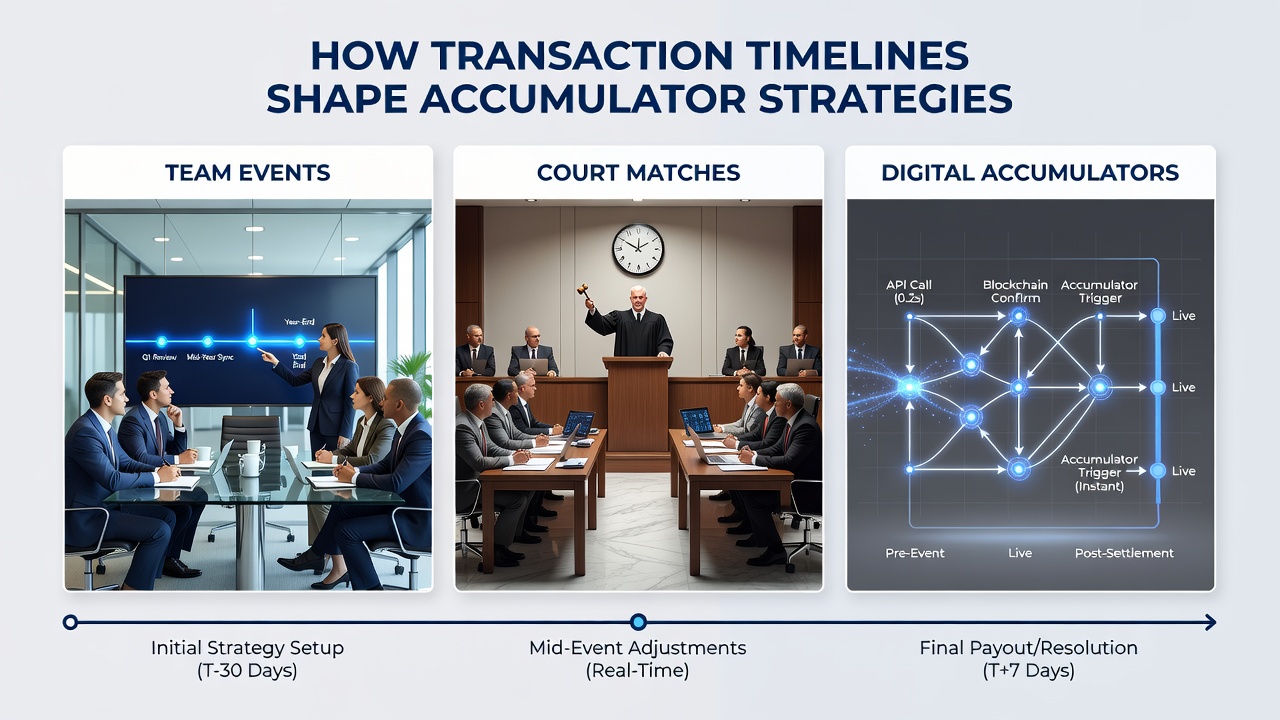
Payment networks that connect directly to mobile banking applications further narrow the gap between decision and execution, enabling users to maintain accumulator momentum across team, court, and virtual events on a single device. Australian Gambling Research Centre analyses released in mid-2026 highlighted that jurisdictions with standardized instant transfer requirements saw measurable increases in multi-leg betting activity during evening esports slates, because bettors could replenish balances between consecutive matches without exiting the platform interface.
Strategic Patterns Across Event Types
Bettors adapt their accumulator length and timing based on the average duration of transaction cycles they encounter, and data patterns indicate that shorter funding windows correlate with more aggressive multi-bet construction in fast-moving environments. In team events with longer overall durations, users often combine pre-match and live legs when deposits clear quickly, while court and digital matches reward platforms that minimize latency to capture fleeting odds. Those who track transaction data across regions observe that operators offering multiple payment rails allow participants to select the fastest available method for each session, thereby preserving the flexibility to extend accumulators as events progress.
Conclusion
Transaction timelines serve as a structural constraint that shapes how accumulators form and evolve across different competition formats, with faster processing enabling greater complexity and real-time responsiveness. As payment technologies continue to integrate with betting platforms, the relationship between funding speed and multi-leg strategy remains a central factor in how participants engage with team events, court matches, and digital arenas throughout 2026 and beyond.