Payment Gateways Reshaping Real-Time Wager Allocations Across Football, Hoops, Rackets, and Digital Arenas on Portable Interfaces
Willa Schmitt · Aug 24, 2026

Payment Gateways Reshaping Real-Time Wager Allocations Across Football, Hoops, Rackets, and Digital Arenas on Portable Interfaces
Payment gateways now handle the bulk of instant fund movements that let bettors adjust allocations while matches unfold across football pitches, basketball courts, tennis courts, and competitive gaming platforms on handheld devices, and data from mid-2026 shows these systems processed more than 62 percent of live wager volume in major markets. Operators integrate application programming interfaces that connect directly to bank accounts and digital wallets, which means transfers clear in seconds rather than minutes and allow reallocations during a single football possession or a basketball timeout.
Instant Transfers Drive Allocation Shifts in Football and Basketball Markets
Football matches generate continuous betting opportunities that require rapid settlement when goals occur or when odds move in response to substitutions, and gateways such as those used by European operators complete these transactions while the ball remains in play. Basketball contests feature even faster score changes, so platforms route wagers through the same low-latency rails that support micro-adjustments between quarters or during free-throw sequences. Observers note that bettors who maintain funded mobile accounts can switch from a pre-match total to a live player-prop bet without leaving the application interface.
Technical Infrastructure Supporting Live Adjustments
Modern gateways employ tokenization and multi-factor authentication that satisfy regulatory standards in jurisdictions including Ontario and several Australian states, where authorities require real-time reporting of transaction volumes. These protocols reduce failed transfers to below one percent during peak live betting windows, according to figures released by the Ontario Lottery and Gaming Corporation in its 2026 quarterly review. The same systems maintain separate ledgers for each sport category, which prevents cross-contamination when a user moves funds between a tennis set and an esports round.
Tennis and Esports See Parallel Growth in Mobile Gateway Usage
Tennis rallies produce frequent score updates that influence point-by-point wagers, and operators have added gateway features that lock in new stakes within the interval between serves. Esports tournaments, which often run across multiple simultaneous matches, rely on the same infrastructure to let participants reallocate capital from one digital arena to another without exiting the portable interface. Research compiled by the European Gaming and Betting Association indicates that combined tennis and esports live-betting traffic grew 28 percent year-over-year through the first half of 2026, with the majority of new volume originating on smartphones.
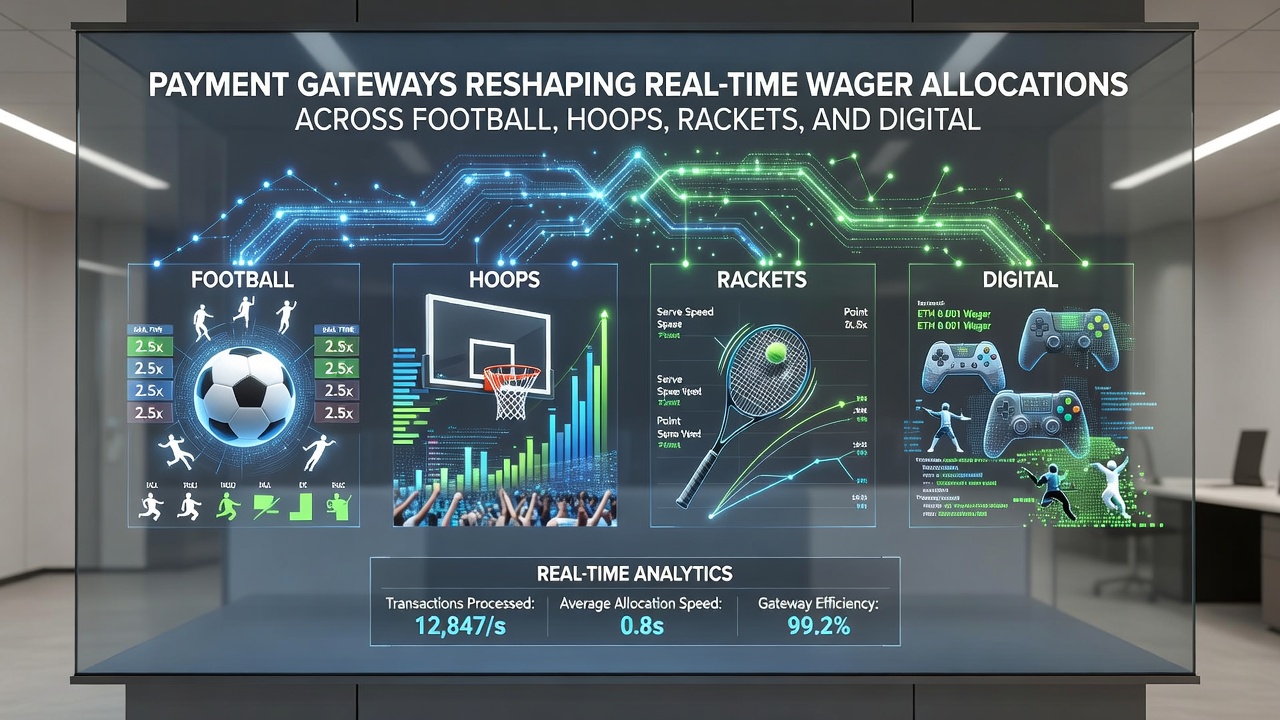
Security layers built into these gateways encrypt each allocation request at the device level before routing it through regional data centers, which keeps processing times under three seconds even during high-traffic events such as major football derbies or championship esports finals. Bettors receive immediate confirmation messages that include updated account balances, allowing them to monitor remaining funds while the competition continues.
Regulatory and Operational Developments in August 2026
August 2026 brought updated compliance requirements in several North American and European markets that mandate clearer disclosure of gateway fees attached to live reallocations. Platforms responded by surfacing these costs within the mobile interface before each confirmation step, which aligns with guidance issued by the Belgian Gaming Commission and similar bodies. The changes have not slowed transaction speeds, yet they give users a transparent view of how small deductions accumulate across multiple rapid-fire wagers.
Industry reports also highlight partnerships between gateway providers and sportsbook operators that introduce unified wallets capable of supporting football, basketball, tennis, and esports markets within one balance. These wallets eliminate the need to switch applications or re-enter payment details when a user moves attention from one sport to another, and early adoption metrics show higher retention rates among accounts that activate the feature.
Conclusion
Payment gateways continue to refine the speed and reliability of real-time wager movements across the listed sports on portable devices, with infrastructure updates in 2026 extending these capabilities to additional markets. Data from regulatory filings and industry associations document sustained growth in live allocation volumes, while technical standards maintain security and transparency requirements. The resulting environment supports seamless transitions between football, basketball, tennis, and esports betting activities without interruption to the underlying competition timelines.